Definition
A patient safety incident investigation (PSII) is a formal, system-based investigation into a patient safety incident, carried out under PSIRF to understand how the incident happened and to identify effective safety actions. It replaced the root cause analysis investigation used under the Serious Incident Framework, and its purpose is learning, not establishing blame or liability.
Source: NHS England, August 2022 · Last reviewed 6 July 2026
When a PSII is required
There are two routes into a PSII. The first is local: the organisation's patient safety incident response plan names the incident types it will investigate because they carry its greatest learning potential. The second is national: some incidents require a PSII whatever the local plan says. Deaths thought more likely than not due to problems in care, meaning those meeting the Learning from Deaths criteria for investigation, are the clearest example named in the framework. Other incident types have their own required reporting or review routes set out in NHS England's guide to responding proportionately, including referral to bodies such as the maternity investigation programme [VERIFY: current name and scope of the maternity and newborn safety investigations body].
Incidents outside both routes get a different learning response, or none, where risks are already understood and improvement work is being monitored. Volume is the point: investigations concentrate where the learning is.
How a PSII differs from an RCA
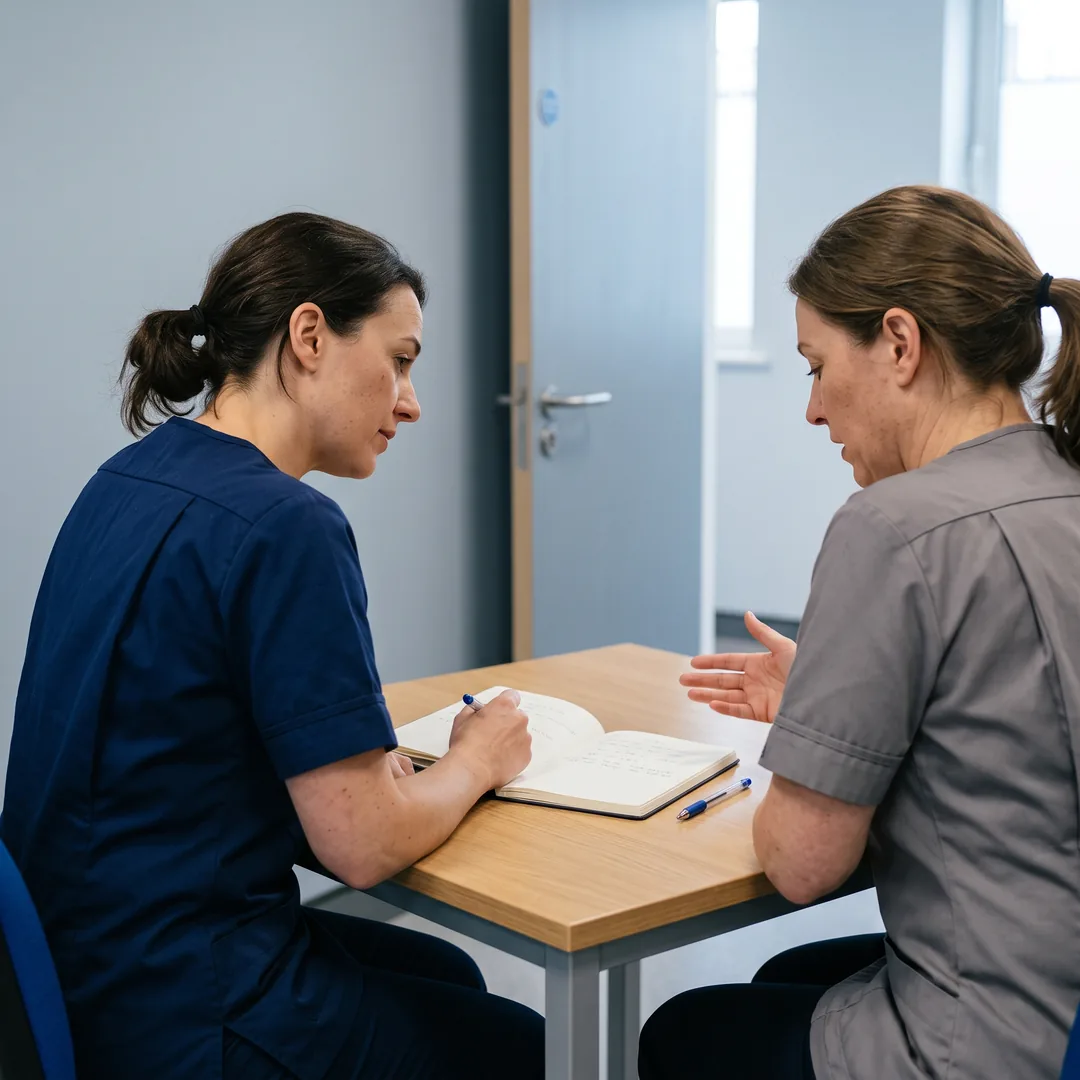
The name change is not cosmetic. A root cause analysis under the old framework worked backwards from the outcome to a root cause, on the model of a linear chain of events. The PSII works from a systems view: care is delivered by people, tasks, tools and environments interacting, so the investigation maps those interactions and asks what made the incident likely, what usually prevents it, and where the system can be strengthened. The phrase "root cause" disappears because single root causes rarely exist in complex care.
The other break with the past is engagement. NHS England's standards expect those affected, patients, families and staff, to be involved from the start: terms of reference are developed with them rather than presented to them, a change covered under the framework's first aim.
How an investigation runs
The shape of a PSII, as set out in the response standards and toolkit templates:
- Commissioning. The decision to investigate is made against the plan or a national requirement, and an investigator with no line involvement in the incident is appointed.
- Terms of reference. Scope and questions are agreed with those affected, including the family where there has been serious harm or death.
- Information gathering. Interviews, observation of work as done, records and relevant data, analysed through the SEIPS lens described on the learning responses page.
- Findings and safety actions. The report sets out the system findings and the specific, owned actions intended to reduce risk, with how their effect will be monitored.
- Sign-off and sharing. The report goes through the organisation's governance, is shared with those affected, and feeds the improvement plan the board oversees.
Timescales
The fixed 60 working day deadline of the old framework is gone. Under the response standards, timeframes are agreed with those affected at the start, with the expectation that investigations should average around three months and not exceed six except in exceptional circumstances agreed with the family and the integrated care board [VERIFY: exact wording of the six month exception in the response standards]. The change trades a predictable deadline for a realistic one; families get a date that reflects the actual scope rather than a standard promise that was routinely missed.
Who leads a PSII
The standards require investigations to be led by people trained in systems-based investigation, working with engagement leads trained in involving those affected, and overseen by people who understand what good looks like. That training expectation is specific, and it is one of the visible costs of the transition; the training page sets out what each role needs. Investigators also carry the record-keeping duty: the incident and its response are logged through the LFPSE service, and safety actions are tracked to completion.